.png)
The Industrial Significance of The Last Duel
- Robbie Weavers

- Aug 30, 2022
- 13 min read
Released on October 15th 2021, Ridley Scott’s The Last Duel (2021) is “a gripping tale of betrayal and vengeance set against the brutality and female oppression of 14th century France. The historical epic… stars Oscar winner Matt Damon and two-time Academy Award nominee Adam Driver as quarrelling lords, both of noble birth, whose grievances must be resolved in a duel to the death”. I loved this film, having watched it on it's opening night I gave it a strong 4.5/5. I thought it was interesting, unique, and engaging - so well crafted. Yet I was one of about five people in the cinema; for a new Ridley Scott film? Just under a year on, in this article I aim to understand some of the effects of the changing film industry through the lens of The Last Duel, and how the film can be used as both an interesting and highly relevant case study of modern Hollywood as it’s production and eventual distribution allows us to view a rapidly changing industry; not only in regards to the COVID-19 pandemic in which it was produced but also what the impact of marketing and star power has on a film released today, The Last Duel was a prestige mid-budget project from one of the most famous directors working in Hollywood today, the implications of it’s critical and financial receptions can clearly be used to show a changing landscape of the Hollywood film industry - one that pushes out the mid-budget movie production in favour of the mega-profit blockbusters or the low risk, high reward smaller productions. To this end, I will be primarily analysing the film through it’s marketing methods such as posters and awards considerations, the impact of star power and the influence of ‘household names’ such as Ben Affleck, Matt Damon, and Ridley Scott, as well as the ultimate financial failure of the film and what this may mean for the future of the industry.

The Last Duel’s first poster was one that is quite unique by modern Hollywood marketing standards, rather than a composited collage of all the main characters heads on a plain background as has become the expected norm in today’s industry due to contractual obligations as well as audience engagement, the poster features a silhouette of Comer’s character against two swords, a rather minimalist yet self-explanatory promotion of the film. A large problem the trailers and promotional material had in regards to the film is explaining to audiences what the content of the film actually was - essentially a 14th century courtroom drama revolving around accusations of rape - while still trying to make the case that the drama of the film is essential viewing, all within the space of a 30 second advert. Compare this to the marketing campaigns of any number of superhero or animated movies that can attract audiences with the mention of a household name IP such as ‘Spider-Man’ or ‘Minions’ and it becomes very easy to see how the epitexts surrounding The Last Duel are much harder to produce and engage with in the modern industry. In September, the ‘floating heads’ style poster was released as well as a series of ad spots that cut to the core of the drama of the film, along with the press tour and premieres focusing on Affleck, Damon, and Comer, we can see that the marketing switched from being one of intrigue and mystery within the promotional materials to focusing on the cast, to relying on getting audiences into seats and waiting for good word of mouth to do a lot of the heavy lifting. In this way it is clear that the majority of the film industry is now focused on the 'bus advert', 'billboard promotion' of it’s ‘guaranteed money makers’ such as the IP giants previously mentioned, allowing smaller films to fall by the wayside in both the marketing strategy as well as the collective public consciousness.
In a quite unusual way, we can analyse The Last Duel’s industrial significance by looking at it’s involvement within the recent merger between Disney and Fox. Two of the largest film studios ever, coming to a deal that led to Fox being absorbed into Walt Disney Studios with The Last Duel as well as a small number of other productions being caught in the middle of the entire deal. Produced by 20th Century Fox, The Last Duel was one of the final films not made by Disney to be released after the merger had been confirmed. As a result many believe that Disney did not promote the film as strongly as it would have been if either Fox was still in control, or if Disney had made it themselves. We can see this theory repeated with films such as The New Mutants (2020), and West Side Story (2021). All films that were released with little fanfare, and against great competition at the box office. Disney’s focus on it’s own outputs and projects obviously impacted The Last Duel’s success yet the argument that this one example can be expanded to mirror Disney’s growing monopoly on the cinema industry is one that holds tight when considering the lack of promotion or care that the studio seems to have for anything that doesn’t fit its business model; one key example of this is Disney’s outright cancellation of Fox produced animated film Nimona which was 75% complete and due to release in a matter of months when Disney shut down not only the film but Blue Sky Studios as a whole. This uncaring attitude from Disney towards anything leftover from the Fox deal is clear to see when considering its promotion of The Last Duel.
One very telling way we can track the abandonment of mid-budget cinema within the industry is through the awards circuit consideration given to The Last Duel, a cast and production with multiple Oscar nominated and winning names attached, working on a gritty dramatic historical film would normally create the buzz of what some call ‘Oscar-bait’ yet within this season’s award campaign we see Disney pushing The Last Duel to the wayside, instead choosing to focus their campaigning efforts on the already financially successful films in its slate such as Black Widow (2021), Cruella (2021). and Encanto (2021). D.K. Simonton argues that “a film’s box office, awards, and critical assessment may partly depend on its genre”, that “dramas and comedies do not have the same likelihood of success” as big box office hits in the action, adventure, and family genres. This can be seen through Disney giving more press and promotion to the ‘For Your Consideration’ campaigns of heavy hitters such as with Sony for Spider-Man: No Way Home (2021), and Cruella . The Last Duel’s second-best nature is highlighted none more clearly than in the misspelling of lead actress Jodie Comer’s name on the official Disney Awards website - 'Jody Comer' would not be winning any awards. Many see this as a slight against the film, made more notable in it’s awkward placement alongside an expansive list of superhero, blockbuster, family fare entertainment. A growing sign that only the most profitable and accessible films have a place in the industry under these new studio behemoths, that the Oscars and other awards shows such as The Golden Globes are perhaps more so than ever simply another form of promotion for the latest blockbuster, as opposed to the platform through which the mid-budget movie should be championed. The absence of a palpable Oscars campaign for the film also highlights the industrial weak point, that in order for a film to be able to access this level of critical acclaim, it is not about the quality of the work or the passion of the filmmakers, but rather whether the financial management of a large studio like Disney deems it corporately profitable enough to invest large amounts of money in a ‘for your consideration’ promotional campaign; something it seems Disney did not believe applied to The Last Duel.

In a society, and an industry, that is so centered around social media and viral engagement the concept of celebrity or headline news has always been, but has recently become, especially important to any form of financial success. The Last Duel’s 14th century distance from the modern world could be said to have impacted its ability to create any form of ‘hype’ or engagement in the way that something like Spider-Man: No Way Home’s TikTok collaboration was able to. Most films these days use press junkets, celebrity tabloids, and social media to generate excitement for films yet the closest there was to any form of viral headline in regards to The Last Duel was either Ben Affleck and Jennifer Lopez’ first public outing after rekindling their relationship, or Ridley Scott’s explosive outbursts at interviewers yet these either failed to direct any attention to The Last Duel, or what little attention it did divert was wasted as the film had already been removed from most markets. The industry practice of making a film a ‘must-see’ in order to keep up with the weekly zeitgeist was something not applied to The Last Duel’s rollout, the impact of its celebrity cast was minimal as was its largely ignored press and premiere tour, despite it being the beginning of what, for some, has been the celebrity story of 2022.
When looking at the amount of talent present both on camera and behind the scenes of The Last Duel, it may seem confusing as to why the film did not perform better or attract more audience attention. Despite being critically approved (85% on Rotten Tomatoes and 7.4/10 on IMDb) the film did not live up to the previous successes of those involved. Two generational Hollywood talents in the form of Affleck and Damon reteaming on and off screen for the first time in years, as well as two up and coming new ‘stars’ in Driver and Comer, all spearheaded by multiple Oscar nominated and ‘celebrity director’ Ridley Scott - the film has no shortage of big name talent to attract audiences, The Last Duel does not seem to be a smaller, under the radar film, and yet general audiences’ lack of engagement with the stereotypical ‘movie stars’ in comparison to previous decades combined with a poor exposure campaign from Disney meant that The Last Duel did slip past the attention of the widespread public. Even a more ‘tabloid’ approach to generate attention for the film with celebrity gossip at the premiere of the film failed to land with much of the attention being drawn away from the film the celebrities were there to promote, and directed towards their personal lives. The official website for the film opens to a synopsis of the film which includes the multiple awards and honours given to its cast and crew, clearly showing that the industry still values the pedigree that these awards bring and yet all of this failed to translate into any real box office earning suggesting that these awards are not as valued by audiences as they are by the industry itself. The most recent Oscars seem to reflect this; whatever your feelings about 'The Will Smith Incident' - it's undeniable that that story overshadowed everything else that went on that night - the ecstatic winners and notable losers of the awards ceremony didn't really register in the public eye, despite the shock triumph of CODA over The Power of The Dog.
One question that is consistently asked of the modern film industry is whether Hollywood is adapting to rely more on a recognised intellectual property i.e Superhero characters such as Batman, and Spider-Man rather than household name actors such as Christian Bale, Ben Affleck, Julia Roberts etc. As Derek Johnson argues “two modes of Hollywood product differentiation” arise from IP and the star system; the names at the heart of The Last Duel as stated above would be expected to be draws a few years ago, the industry seemed to focus on the idea that ‘Celebrity Movies’ would be successful - franchises such as The Expendables (2010) and the Ocean’s films leaning more on the fame of their cast members’ interactions than whether the film itself was interesting to the viewer - yet in recent years we see that the known names of characters are becoming more important than the names of the people in the film. The relative failure of Tom Holland’s non Marvel films such as Cherry (2021), and The Devil All The Time (2020), shows that audiences and the industry today are focused on the IP and not the people delivering it. Block and Wilson wrote that “a character such as Spider-Man or a concept such as Star Wars was more important than any one actor”. The Star Wars franchise supposedly made a movie star out of Adam Driver yet few turn up to see him in films such as Annette (2021) or The Last Duel. The main draw is moving away from the Hollywood tradition of advertising a film with a celebrity name - something that can be traced back to include ‘The Abbott and Costello Meet The Monsters’ franchise of the 40’s and 50’s which headlined the celebrity name of the comedy duo over the IP of the Monster they would meet in the film - towards the characters themselves. It is in this way that The Last Duel seems to mark a move away from the power of celebrity in favour of the power of a symbol or instantly recognisable character.
If we consider ‘Mid-Budget Cinema’ as a film that costs anywhere between $10 million and $100 million dollars then we can soon see how the industrial standards are beginning to turn towards the low budget films, and the high budget blockbusters, primarily due to a much higher return on investment on either extreme of the budgetary scale.


When looking at 2021’s box office figures we see consistent failings in the mid-budget range yet as we can see when comparing the two graphs, the return on investment (ROI) of the $100 million+ films is much higher than that of the mid-budget cinema. This is a clear trend that movie producers and distributors would much rather focus their efforts on the big budget films and almost guarantee profit as opposed to the high risk, low reward of more diverse mid-budget films. The only exceptions to this rule generally seem to lie in the established horror franchises of The Conjuring and Halloween, both two Blumhouse produced series, someone who has seemingly mastered how to move towards a high ROI. Low budgets, high profits, good films, Blumhouse are on a roll at the moment.
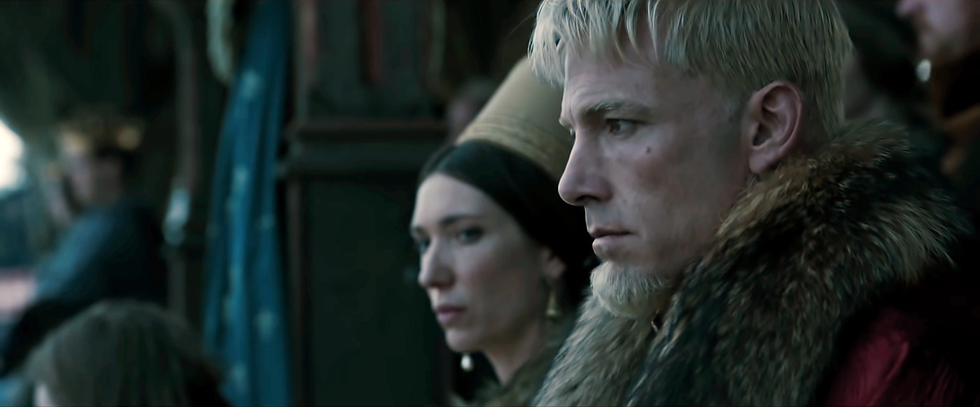
One very important aspect of The Last Duel’s industrial significance can be seen in its theatrical presence; estimated to have opened in 3,065 theatres across the USA and Canada yet to a very small return of $4.8 million at the box office. Some argue that this was due to the film’s primary audience being the 45+ demographic, who had failed to return to cinemas due to the ongoing COVID-19 pandemic, however after the film’s second week at the box office, it was pulled from 69% of it’s theatres, losing 2,115 screens, and playing in only 950. This is such a huge blow for the film that had been reliant on a word of mouth (WOM) publicity campaign rather than any palpable industry backing. Yong Liu writes that “WOM is more of a complement to other information sources than a substitute”, in this way we can see the importance of marketing epitexts and word of mouth campaigns working in tandem, yet without a strong advertising campaign - just as word was beginning to spread about the film, it was taken out of circulation, with no way for audiences to see it. This was until it’s 45 day theatrical window was over and the film was quietly dropped onto Disney+ where existing subscribers could watch the film for free meaning no real profit or gain could be made from the production. This is indicative that the current release model is a huge hindrance to anything that does not make massive opening day takings. Throughout 2021, multiple Marvel films were playing alongside each other, as well as blockbusters like Cruella, and No Time To Die (2021), all of which swallowed up the screentime of these mid budget films such as The Last Duel and West Side Story. Despite the divorcement process within the industry at large, all the way down from the production companies to the distributors and exhibitors, the focus and promotion of action blockbusters over unique prestige dramas presents a very challenging industry for interesting and firm films, such as The Last Duel, to be championed or supported by movie-goers.
The films that released alongside The Last Duel can also help us understand the industrial significance of the film, obviously a huge caveat on how The Last Duel performed and was promoted can be attributed to the COVID-19 pandemic, with industry wide losses coming as a result of a general reluctance among the public to return to cinemas; however this is not a neat explanation as to why The Last Duel performed so badly at the box office. Releasing alongside The Last Duel were Halloween Kills, and a week beforehand No Time To Die, the newest installment of the James Bond franchise, as we can see in the attached graph, from the very first day of their releases, Halloween Kills (2021) outmatches The Last Duel by over $20 million, this is especially remarkable when considering that Halloween Kills was also released day-and-date on Peacock’s US streaming service which meant that viewers were able to see the film at home for a smaller fee, yet audiences still went to see Halloween Kills in theatres, this along with No Time To Die which had already earned $82,342,659 suggests that audiences are willing to see a film in theatres should it interest them, or be advertised to them effectively. The argument can be made that the subject matter and the demographic targets for each respective film mean that the type of audience that would be attracted to Halloween Kills and No Time To Die, are inherently more open to going to a cinema during the pandemic, yet this further supports the growing signs within the industry that movies and cinemas are becoming further biased towards providing tentpole experience movies as opposed to the type of mid-budget prestige such as The Last Duel.
To try and summarise all this, The Last Duel can be used as a highly significant reflection of the state of mid-budget cinema within the modern film industry. Its second-place style marketing and rollout, falling victim to the shut-outs of larger tentpole franchise films, and its commentary on the effectiveness of celebrity all point to a concerning decline for the middle ground of Hollywood filmmaking. The financial failure at the box office, combined with the very slim chances of winning any major awards this season, all point not only to the reluctance of audiences to see these films but also to the seemingly growing disdain that the industry seems to have for this kind of ‘prestige cinema’. “Why risk $100 million dollars on the best case being a small ROI, when studios can spend $50-100 million more and get an almost guaranteed high ROI?” Seems to be the pervading sensibilities in all areas of the industry besides the horror genre, something that has been a through line of Hollywood since the Universal Monster films of the 30’s. The Last Duel’s lack of exposure to the general public despite once ‘big-ticket’ names such as Affleck, Damon, and Scott all indicate that audiences and industry alike are moving away from the Celebrity prestige and event of a new film from a well-known actor or director, and towards the overarching stories of a continuous IP fuelled franchise. The impact of the covid-19 pandemic can, obviously, not be understated; The Last Duel was a film that most likely relied on the 45+ demographic of audiences - those who may not have felt too confident in going to the cinema in October 2021 - yet the extremely short two week release window in the majority of theatres (compared to a film like No Time To Die which is still playing in some theatres, months after its initial release) and the lack of any substantial marketing push meant that the word of mouth roll out this film would have relied on, did not have any chance to make a serious impact or intake at the box office. These trends all point to the prioritisation of big budget entertainment within the industry, with little room for the variety and talent that can be found in the declining mid-budget film.


Comments